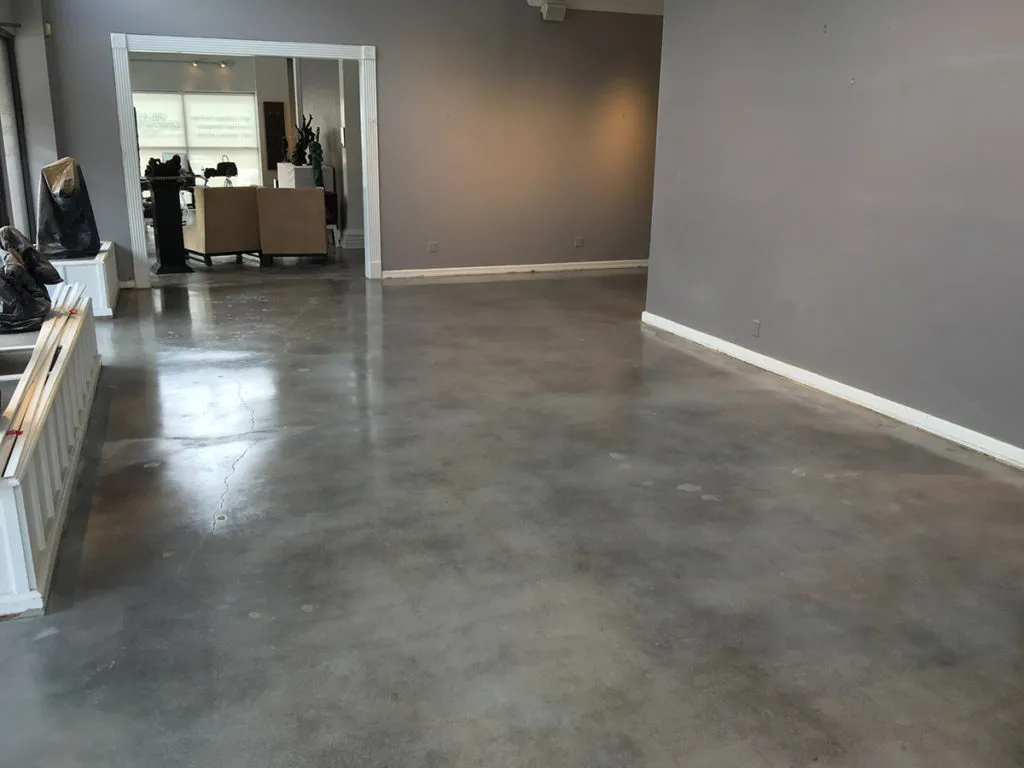
New concrete is rarely perfect, and some marks are normal. Others are defects the installer should fix. This page helps you tell them apart in our wet climate. It is general information, not a judgment on any one job.
Why is my new concrete already cracking?
New concrete can crack in its first weeks because it shrinks as it dries. Thin hairline cracks that stay tight are common and mostly cosmetic. Joints are cut so the slab cracks along them instead of across the middle. A crack that is wide, has one side higher, or runs where there should have been a joint points to a problem with the base, the joint layout or the mix.
Is the contractor responsible for a crack that shows up weeks later?
The contractor is responsible when the crack comes from the workmanship: joints missing or cut too late, a thin slab, a soft base or too much water in the mix. No one can promise that concrete will never crack, and most contracts say so. Read what your written warranty covers, take dated photos with a tape measure in them, and raise it in writing.
Why does my new concrete have dark and light patches?
Dark and light patches on a new slab are usually uneven drying. In Vancouver the shaded, damp side of a pour stays dark for weeks while the sunny side lightens. Different truckloads, plastic sheeting that touched the surface and uneven troweling also leave blotches. Most of it evens out over the first months. Marks that are still there after a full dry summer are likely permanent.
What happens if it rains on fresh concrete?
If it rains on fresh concrete in the first few hours, the surface can be weakened or pitted. Light rain after the surface has set does little harm. Heavy rain during finishing washes cement off the top and leaves a soft, sandy layer that dusts and flakes later. Crews here watch the forecast closely and keep plastic on site. If a hard shower hit your pour, ask what was done and watch the surface through the first winter.
There are footprints, rough spots and low spots that hold water, and the pad is out of level. Is that acceptable?
Footprints and deep low spots are not acceptable work. A small, shallow dip that dries in a few hours is within normal tolerance for hand-finished concrete. A puddle that lasts a day in our climate grows moss and gets slick. A pad that is out of level may be on purpose, since outdoor slabs are sloped to drain. If the slope runs the wrong way or the pad was meant to be level for a shed or hot tub, that is a defect to raise before final payment.
Are control joints really necessary? The contractor says he will saw-cut them a week later.
Yes, control joints are necessary, and a week later is too late. Concrete starts cracking from shrinkage within the first day or so. Joints are tooled in during finishing or saw-cut soon after the slab can take the saw, normally within about a day. Cuts made a week later are decoration, because the slab has already chosen where to crack.
The slab was poured without rebar or mesh and I found out afterwards. What now?
A slab poured without rebar or mesh is not always a failure. Plain patios and walks on a good base often have no steel. A driveway, a slab on soft ground or any structural slab is another matter. Check your contract first. If steel was listed and not installed, you did not get what you paid for and should say so in writing. If it was never listed, watch the slab and keep heavy vehicles off it.
What can I do if the contractor will not come back to fix it?
If the contractor will not come back, put the problem in writing with photos and a deadline. Next, look the contractor up on the Washington Department of Labor and Industries site to confirm the registration and bond. A registered contractor carries a bond that a customer can claim against through a court action. You can also file a complaint with the Washington Attorney General's consumer protection office, or use small claims court in Clark County District Court. For a large loss, talk to a lawyer.
My new stamped concrete is slippery when wet. Can that be fixed?
Yes. Stamped concrete gets slippery because the sealer forms a smooth film, and here it is wet most of the year. The fix is a grit additive mixed into the next coat of sealer, or stripping a heavy sealer and using a thinner one. Ask for the anti-slip additive before the first coat on any stamped walk, step or pool deck.
Why is my stamped concrete fading, cloudy or peeling?
A cloudy or white sealer has moisture trapped under it. This is the most common stamped concrete complaint in western Washington, because sealer goes on while the slab is still damp or just before rain. Peeling comes from too many coats. Fading is the sealer wearing off. A contractor can often clear the haze with a solvent treatment, and the cure for the rest is to strip and reseal in a dry spell.
The surface started flaking in its first winter. Why?
Flaking in the first winter means the top layer was weak. Rain during finishing, water sprinkled on to make troweling easier and a mix without air entrainment are the usual reasons. Deicing salt in the first winter makes it far worse. Concrete placed late in autumn also has little time to gain strength before the first freeze. Report it to the installer in writing as soon as you see it.
It was poured in a heat wave and now looks bad. Did the heat cause it?
Quite possibly. Concrete poured in high heat sets fast, and our dry summer east winds pull water out of the surface. That leaves fine surface cracks, rough patches and color differences. Summer highs here are usually mild, but heat waves do happen. A crew should respond by pouring early, wetting the base and curing the slab straight away. If none of that was done, the surface damage is a workmanship issue.
The stamped pattern is crooked and uneven. Do I have to pay the final balance?
Do not pay the final balance until you have talked it through, and do not refuse it outright either. Send photos and a written list of what is wrong. Uneven stamping cannot be fully corrected once the concrete is hard. Options are grinding and re-coloring small areas, a price reduction or replacing sections. Agree the remedy in writing, then pay according to that. Holding back a fair amount for a real defect is reasonable. Withholding everything can put you in breach of the contract.
The crew left ruts in the lawn, washout and splatter, and the forms are still on. Who cleans up?
The contractor does, unless your contract says otherwise. Ruts from the truck or buggy, concrete washout dumped on the ground and splatter on siding are part of the job to put right. On soft winter lawns here, ruts are hard to avoid without ground protection, so ask about it before the pour. Forms normally come off within a day or a few days. Forms left for weeks swell and stick, and prying them off can chip the slab edge.
If you want a second opinion on a new slab, call (360) 995-1179 or text photos. We will tell you plainly what we see.